Mix Coneflower Seeds

Rudbeckia
Regular price $6.99
Regular price $9.99 Sale price $6.99
Sale Sold out
Pack Size
40% OFF - The Best Value
50% OFF - The Best Value
Quantity
View full details

About

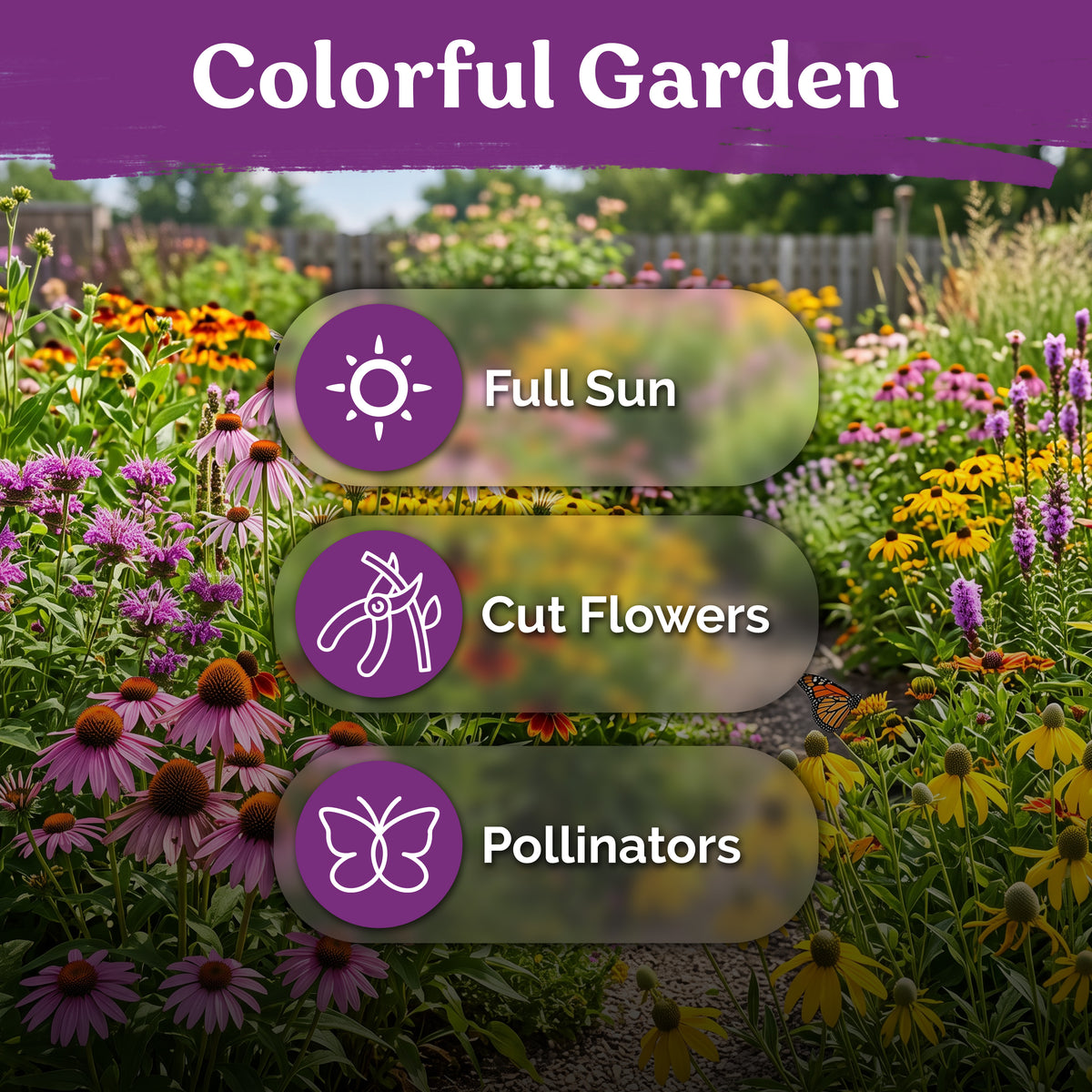
Mix Coneflower is a seed blend combining several coneflower species and varieties, including Echinacea Purpurea, Black-Eyed Susan (Rudbeckia hirta), and other daisy-like relatives, so each plant in the bed will differ in color, petal shape, and center cone size. The flowers reach 2–4 feet tall with a raised, cone-shaped center that darkens as it matures, sitting above petals in shades of purple, pink, orange, yellow, and gold depending on which species germinates. This blend suits USDA Zones 3–9 and handles drought, poor soil, and hot summers with little complaint, regardless of which coneflower type is growing. Gardeners use this mix for pollinator gardens, cut flower arrangements, prairie-style borders, and naturalized meadow plantings, since bees, butterflies, and birds visit all the included species readily. This 550-count packet gives you enough coneflower seeds for a full flower bed or a multi-season planting rotation, and it's a strong pick for anyone who wants a naturalized look with built-in variety rather than buying separate packets for each species.

Quick Facts

Life Cycle
Life Cycle Annual
USDA Zones
USDA Zones 03–10
Light Requirements
Light Requirements Full sun; Part sun
Germination Time
Germination Time 14-21 days
Stratification
Stratification Required
Spacing
Spacing 12-18 inches
Sowing Method
Sowing Method Direct Sow; Start Indoors
Soil
Soil Average; Well-drained
Flowering Period
Flowering Period Summer; Fall
Water Requirements
Water Requirements Moderate (regular watering)
Maturity Time
Maturity Time 90-120 days
Growing Habit
Growing Habit Upright

How to Grow & Harvest

Sowing & Timing

Coneflower seeds benefit from cold stratification, so refrigerate them in moist sand or a damp paper towel for 2–4 weeks before sowing if you're planting in spring. Sow seeds 1/4 inch deep and space them 12–18 inches apart, since mature plants need room to branch out regardless of species. Coneflower seeds germinate in 10–20 days when soil temperature holds between 65–70°F, though black-eyed Susan often sprouts a few days faster than Echinacea within the same mix. Fall sowing works too, letting winter handle the stratification naturally, and many growers find this produces stronger first-year blooms across the whole blend. Keep the soil surface consistently damp until seedlings appear, then ease off watering frequency.

Soil, Watering & Fertilization

This mix requires full sun (at least 6 hours) to produce dense, upright blooms and avoid leggy stems across all the included species. Coneflower tolerates average, sandy, or rocky soil, but it prefers well-drained ground and struggles in areas where water pools after rain. Watering should stay light once plants are established, since overwatering causes root rot faster than drought stress causes wilting, and this holds true whether it's Echinacea or Rudbeckia coming up. New seedlings need regular moisture for the first few weeks, but mature plants handle dry spells without extra attention. Skip heavy mulch right at the crown, as it traps moisture and invites fungal issues.

Growth & Harvest

Deadhead spent coneflower blooms through summer to extend the flowering window into early fall, since both Echinacea and Black-Eyed Susan rebloom readily when spent flowers are removed. Leave some seed heads standing at season's end, since finches and other birds feed on them through winter regardless of which coneflower type produced them. This mix doesn't need fertilizer in most soils, and pushing growth with feed often produces floppy stems that need staking. Divide clumps every 3–4 years once the center of a plant starts thinning out, which keeps the planting vigorous. For cut flowers, harvest stems when the petals have fully opened but before the center cone hardens completely.

FAQ

Are these coneflower seeds for sale non-GMO?

Yes. KVITER offers heirloom, open-pollinated, non-GMO coneflower seeds for sale, with no treated coatings added. Buy coneflower seeds online at KVITER with confidence that germination rates stay consistent batch to batch. Orders above $49 ship free, so bulk coneflower seeds orders across multiple flower beds work out well cost-wise.

Is Mix Coneflower easy to grow?

Yes, it's one of the more low-maintenance perennial mixes for a new gardener. Stratify the seed, plant in full sun, and avoid overwatering — that covers nearly everything the whole blend needs to establish.

What are good companion plants for Mix Coneflower?

This blend pairs well with Russian sage, yarrow, and ornamental grasses, since they share similar sun and drainage needs. Avoid pairing it with moisture-loving plants like hostas, which need consistently damp soil that conflicts with the mix's drought tolerance.

Why buy a mix packet instead of a single species?

A mix gives bed-wide variation in color, height, and bloom shape without extra planning, since the packet already blends Echinacea, Black-Eyed Susan, and other coneflower relatives in one order. It's an efficient way to fill a larger space with visual diversity from a single purchase, and it works well for gardeners who want a naturalized, wildflower-meadow look rather than a uniform planting of one species.