Southern Giant Curled Mustard Seeds

Brassica Juncea
Regular price $6.99
Regular price $9.99 Sale price $6.99
Sale Sold out
Pack Size
40% OFF - The Best Value
50% OFF - The Best Value
Quantity
View full details

About

Southern Giant Curled Mustard is a fast-maturing leafy green that produces large, bright green, deeply Curled Mustard leaves with a mild, slightly peppery flavor. Brassica Juncea is native to the Indian subcontinent and Central Asia. The plant grows upright, reaching 18–24 inches, with large, deeply ruffled bright-green leaves that look almost frilly at the edges. It's a cool-season annual, best suited for USDA Zones 3–7, though it performs well outside that range in spring and fall windows. 

Quick Facts

Life Cycle
Life Cycle Annual
USDA Zones
USDA Zones 03–07
Light Requirements
Light Requirements Part sun; Full sun
Germination Time
Germination Time 7–14 days
Stratification
Stratification Not required
Spacing
Spacing 6+ inches
Sowing Method
Sowing Method Direct Sow; Start Indoors
Soil
Soil Slightly Acidic
Flowering Period
Flowering Period -
Water Requirements
Water Requirements Moderate (regular watering)
Maturity Time
Maturity Time 40-50 days
Growing Habit
Growing Habit Upright

How to Grow & Harvest

Sowing & Timing

Direct sow Curled Mustard seeds ¼ inch deep when soil temperature reaches 45–75°F; cooler than that and sprouts lag, warmer and you will face bolting before the plant even establishes. Southern Giant Curled Mustard seeds germinate in 7–14 days under good conditions. For continuous harvest, succession-sow every 2–3 weeks. Thin seedlings to 6 inches apart for baby leaf harvest, or out to 12 inches if you're growing full heads.

Soil, Watering & Fertilization

Give cucumbers full sun or do not expect much from them. They want loamy, sandy, fertilized, well-drained soil with a pH around 6.0-6.5, because shallow roots hate sitting in wet ground. Keep moisture steady instead of flooding and drying the bed over and over — that swing leads to stress and uneven fruit. Always water the root zone, not the whole plant. Wet foliage invites powdery mildew, while even soil moisture keeps vines moving and fruits filling properly.

Growth & Harvest

Giant mustard seeds are genuinely low-effort once sprouted. The main threat is heat: above 85°F, plants bolt and leaves turn bitter fast. If you're in a warmer climate, plant early and pull before summer hits, then replant in late summer for a fall crop. A monthly side-dress of balanced fertilizer keeps leaves producing; skip it and plants still grow, just more slowly. The plant is ready to be harvested in about 40-50 days after sowing.

FAQ

Are Curled Mustard seeds?

Yes. KVITER Southern Giant Curled Mustard seeds for sale are non-GMO.  You can save seed from your best plants at the end of the season and replant next year.

Can Southern Giant Curled Mustard be grown in containers?

It can, and it works well. Use a pot at least 8 inches deep, keep it in a sunny window or under grow lights, and harvest outer leaves continuously. In containers it won't reach the same size as an outdoor plant, but for microgreens or baby leaf salad mix, container growing ideal.

What are the best companion plants for Brassica Juncea?

Nasturtiums are a practical choice — they attract aphids away from your mustard. Bush beans and onions planted nearby tend to deter common brassica pests. Avoid planting near other brassicas (cabbage, kale, broccoli) or  in the same bed repeatedly, as it concentrates soil-borne disease pressure.

Is this easy to grow for a beginner?

Yes — it's one of the more forgiving vegetables you can start with. Germination is reliable (85–95%), the growing window is flexible, and the plants tell you clearly when something is wrong. The only thing to remember is planting Brassica Juncea seeds too late in spring and hitting summer heat before you get a full harvest.

How can I use Curled Mustard leaves?

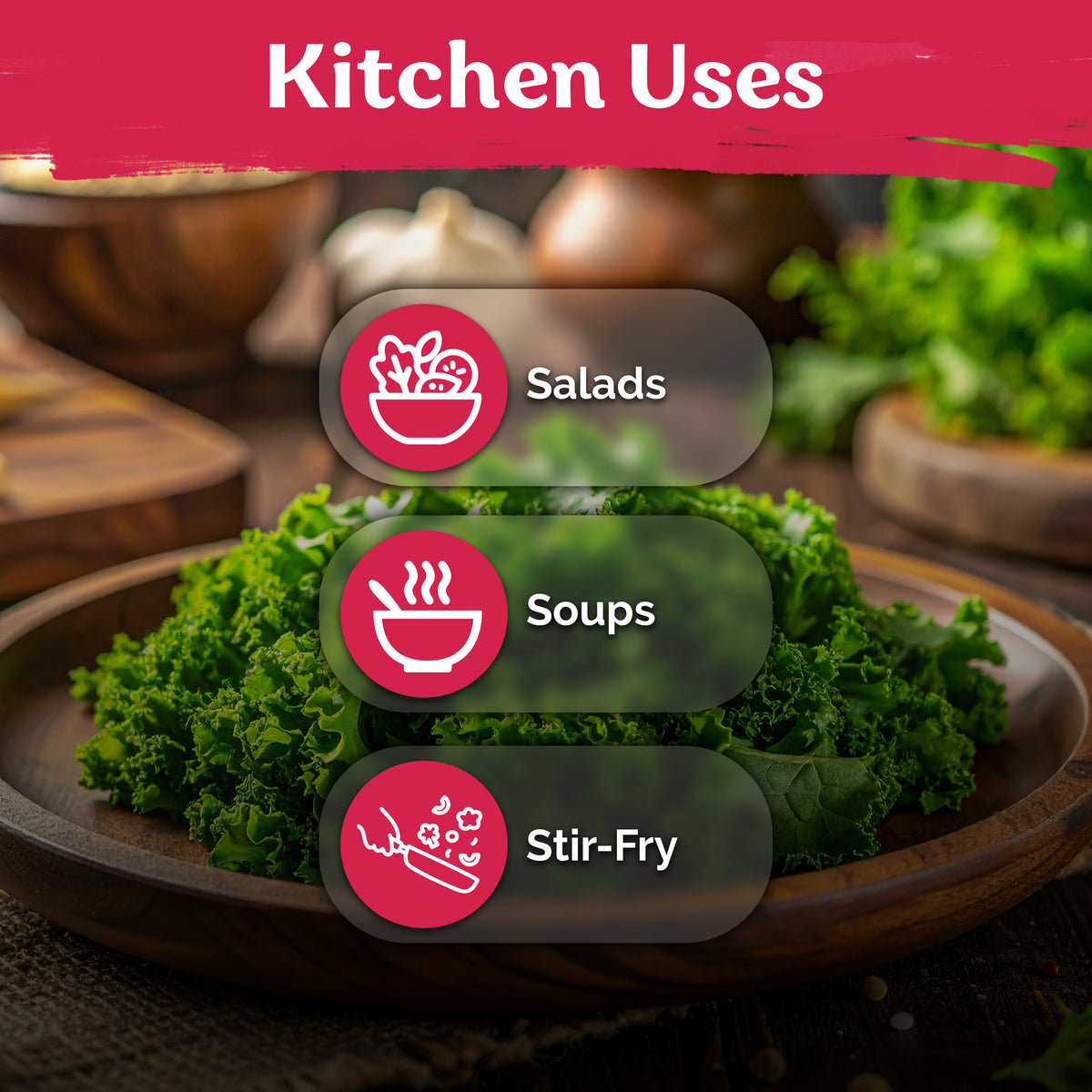
Culinary uses are extensive. Fresh mustard greens can be eaten raw, steamed, boiled, or stir-fried, and work well as a Spinach substitute in quiche or blended into mashed potatoes. Microgreens from mustard seeds can be harvested early for added nutrition and flavor. Mustard seeds are naturally high in vitamins A, C, and K, supporting immune health and nutrient absorption.