Red Garnet Amaranth Seeds

Amaranthus Tricolor
Regular price $6.99
Regular price $9.99 Sale price $6.99
Sale Sold out
Pack Size
40% OFF - The Best Value
50% OFF - The Best Value
Quantity
View full details

About

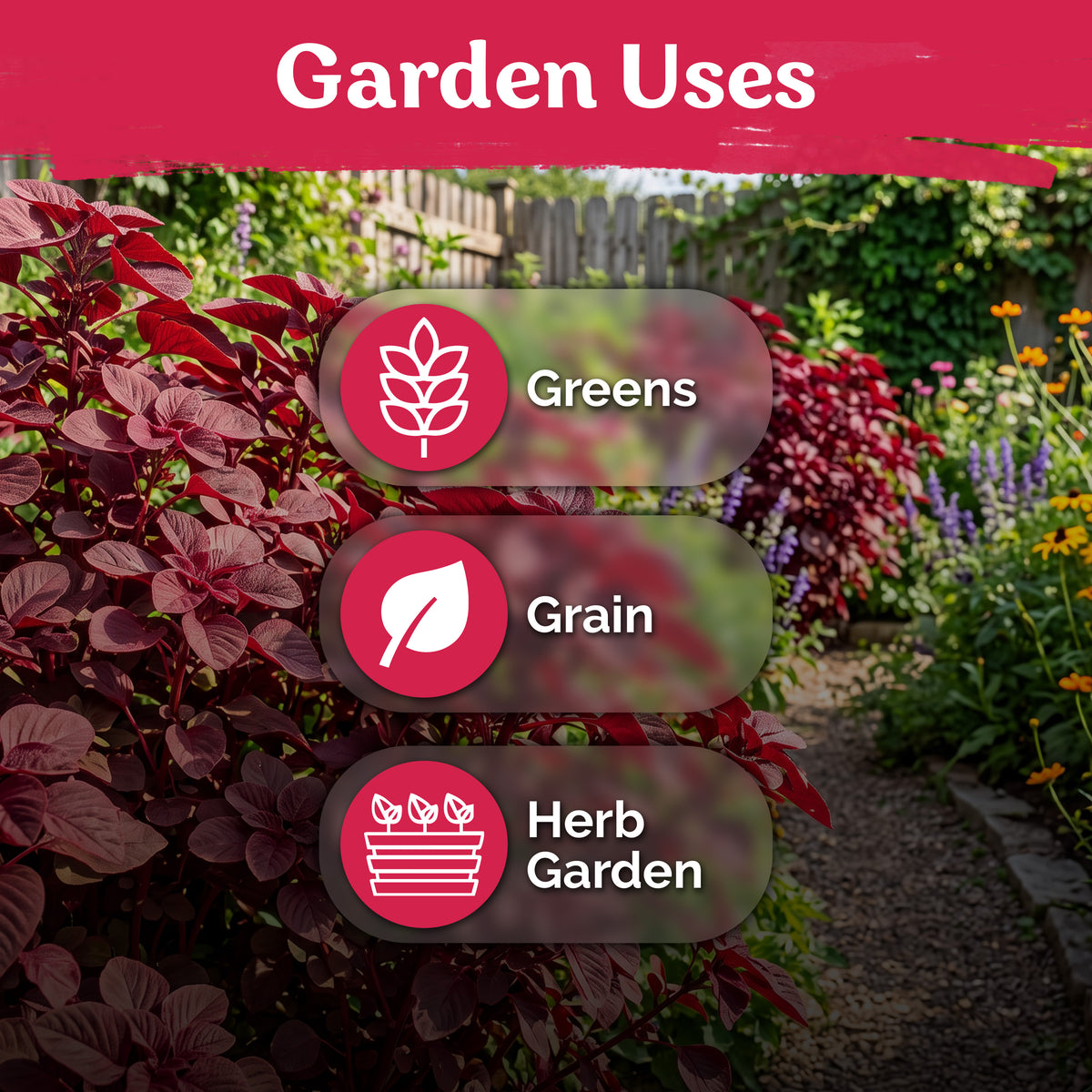
Red Garnet Amaranth is a fast-growing annual grown for its deep crimson-red foliage and dense, upright plumes that hold color from midsummer through frost. Gardeners plant these Red Amaranth seeds for both ornamental borders and as a grain-and-greens crop, since young leaves are edible and the seed heads produce a nutritious grain once dried. The plant reaches 4–6 feet tall with a spread of about 18–24 inches, and the foliage runs from burgundy to near-black red depending on sun exposure. Red Garnet Amaranth grows across USDA Zones 2–11 as a warm-season annual, tolerating heat and dry spells better than most leafy crops. It works well as a backdrop plant, a cut-flower filler, or a productive patch in a vegetable bed, and the striking color makes it a common pick for gardeners who want height without relying on trellising.

Quick Facts

Life Cycle
Life Cycle Annual
USDA Zones
USDA Zones 03–10
Light Requirements
Light Requirements Full sun; Part sun
Germination Time
Germination Time 7–14 days
Stratification
Stratification Not required
Spacing
Spacing 12-28 inches
Sowing Method
Sowing Method Direct Sow; Start Indoors
Soil
Soil Average; Well-drained
Flowering Period
Flowering Period Summer; Fall
Water Requirements
Water Requirements Moderate (regular watering)
Maturity Time
Maturity Time 90-120 days
Growing Habit
Growing Habit Upright

How to Grow & Harvest

Sowing & Timing

Sow Red Amaranth seeds for planting directly outdoors after the last frost, once soil has warmed to at least 65°F, or start them indoors 4–6 weeks earlier for a head start. Plant seeds 1/4 inch deep, since they need shallow coverage and some light exposure to sprout reliably. Space seeds 12–18 inches apart, or thin seedlings to that spacing once they reach 2–3 inches tall. Red Leaf Amaranth seeds germinate in 7–14 days under warm, consistently moist conditions. Amaranth seeds are tiny, so mixing them with sand before sowing helps spread them evenly and avoids clumping.

Soil, Watering & Fertilization

Red Garnet Amaranth needs full sun, at least 6 hours daily, to develop its deepest leaf color and strongest stem growth. It grows in average, well-drained soil and doesn't require rich ground the way many leafy vegetables do. Overly fertile soil actually pushes weak, floppy growth, so skip heavy feeding at planting. Water regularly while seedlings establish, then back off once plants mature, since established Amaranth handles drought well. Standing water or soggy soil causes root rot quickly, so drainage matters more than moisture retention here.

Growth & Harvest

Pinch young plants once they reach 12 inches to encourage bushier, fuller growth rather than a single tall stalk. Red Garnet Amaranth rarely needs fertilizer, but a light feeding mid-season helps if leaves start looking pale. Harvest young leaves continuously for salads or cooked greens, picking from the outer growth so the plant keeps producing. For grain, wait until seed heads dry and turn brown, then shake or rub the heads over a container to collect the seeds. Cut flower stalks for fresh or dried arrangements once the plumes fully color, since they hold their shape well after drying.

FAQ

Are these Red Garnet Amaranth seeds non-GMO?

Yes. KVITER offers Red Garnet Amaranth seeds for sale that are heirloom, open-pollinated, and non-GMO. Buy this 2000-count packet online at KVITER for reliable germination and consistent leaf color season after season. Orders above $49 ship free, so it's worth stocking up if you're planting a larger bed.

Is Red Garnet Amaranth easy to grow?

Yes, Amaranth is a low-maintenance plant once established. It tolerates poor soil, handles heat, and needs little feeding, which makes it a forgiving choice even for beginner gardeners.

Can Red Garnet Amaranth be grown in containers?

Yes, though it needs a container at least 12 inches deep and wide to support its root system and mature height. Pinching the plant back keeps it more compact for pot growing.