VF Roma Tomato Seeds

Solanum Lycoperscium
Regular price $6.99
Regular price $9.99 Sale price $6.99
Sale Sold out
Pack Size
40% OFF - The Best Value
50% OFF - The Best Value
Quantity
View full details

About

Roma VF Tomato is a determinate paste variety grown for its dense, meaty flesh and low seed count, making it the standard choice for sauces, canning, and sun-drying. The "VF" designation means the plant carries resistance to Verticillium and Fusarium wilt, two soil-borne diseases that wipe out less resistant tomato stock. Fruits are oblong, roughly 2–3 inches long, and ripen to a deep red with thick walls that hold up well during cooking. The plant itself stays compact, reaching 3–4 feet, so it doesn't need the sprawling support a vining tomato demands. Roma VF Tomato suits USDA Zones 3–11 as a warm-season annual, and it's a dependable pick for anyone stocking a kitchen garden.

Quick Facts

Life Cycle
Life Cycle Annual
USDA Zones
USDA Zones 03–10
Light Requirements
Light Requirements Full sun
Germination Time
Germination Time 5-10 days
Stratification
Stratification Not required
Spacing
Spacing 18-24 inches
Sowing Method
Sowing Method Direct Sow; Start Indoors
Soil
Soil Well-drained; Loose; Sandy
Flowering Period
Flowering Period -
Water Requirements
Water Requirements Moderate (regular watering)
Maturity Time
Maturity Time 75-90 days
Growing Habit
Growing Habit Bushy

How to Grow & Harvest

Sowing & Timing

Start Roma VF tomato seeds indoors 6–8 weeks before the last expected frost, since the plant needs warm soil and won't tolerate transplant. Sow seeds 1/4 inch deep in trays or small pots, keeping the growing medium consistently damp but not soaked. Roma VF tomato seeds germinate in 5–10 days when soil temperature holds between 70–85°F, and a heat mat speeds this along in cooler indoor conditions. Harden off seedlings over a week before moving them outside, exposing them gradually to direct sun and outdoor temperature swings. Transplant once nighttime lows stay reliably above 50°F, spacing plants 18–24 inches apart in rows 3 feet apart.

Soil, Watering & Fertilization

Roma VF Tomato requires full sun, at least 6–8 hours daily, to set fruit properly and develop good flavor. It grows in basically any garden soil, but give it deep, well-drained, slightly acidic loam enriched with compost and you'll get heavier fruit sets. Water deeply and consistently, aiming for about 1–2 inches per week, since irregular watering causes blossom end rot and split skins on the fruit. Avoid wetting the foliage when watering, and water at the base instead, because damp leaves invite fungal issues. A layer of mulch around the base helps retain soil moisture and keeps weeds down through the season.

Growth & Harvest

Stake or cage Roma VF Tomato early, since the fruit load can weigh down stems even on this compact variety. Feed with a balanced fertilizer at planting, then switch to a lower-nitrogen, higher-potassium feed once flowering starts, as too much nitrogen produces leafy growth at the expense of fruit. Prune suckers below the first flower cluster to improve airflow and reduce disease pressure. Roma VF Tomato reaches harvest in about 75–80 days from transplant, and fruit is ready when it turns fully red and gives slightly under gentle pressure. Pick fruit regularly once ripening starts, since leaving mature tomatoes on the vine slows down new fruit production.

FAQ

Are these Roma VF tomato seeds for sale non-GMO?

Yes. KVITER offers Roma VF tomato seeds for sale that are heirloom, open-pollinated, and non-GMO. Buy this 450-count Roma VF tomato seeds packet online at KVITER for reliable germination and true-to-type fruit each season. Orders above $49 ship free, so it's worth stocking up if you're planning a full sauce-tomato bed.

Is Roma VF Tomato seeds easy to grow?

Yes, it counts as low-maintenance for a tomato variety, largely because the VF resistance cuts down on disease-related losses. Keep watering consistent, stake it early, and prune suckers, and the plant handles the rest.

What are good companion plants for Roma VF Tomato?

Roma VF Tomato grows well next to basil, carrots, onions, and marigolds, which help with pest deterrence and space efficiency. Avoid planting it near corn or fennel, since both compete for nutrients or attract shared pests.

What is Roma VF Tomato mainly used for?

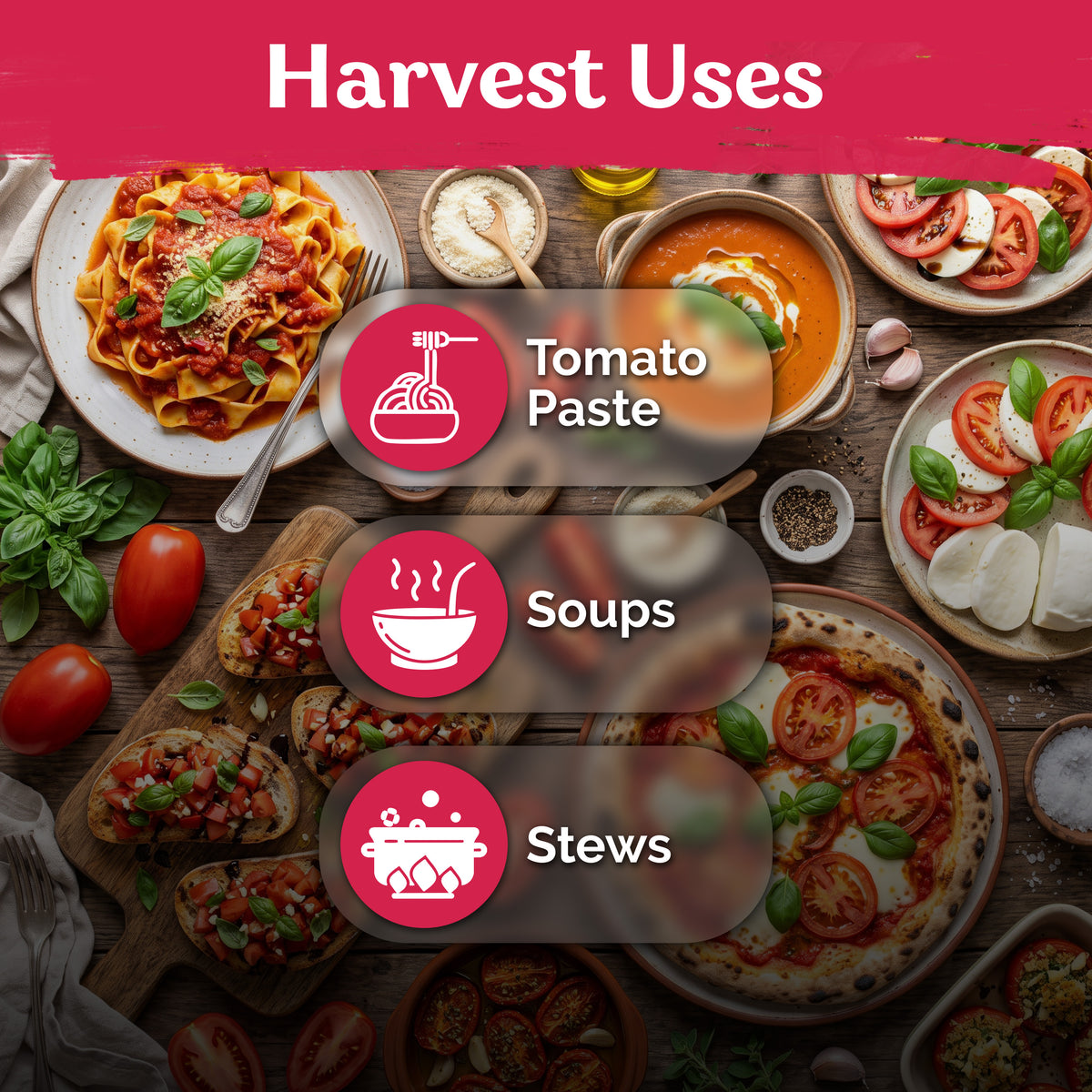
It's grown mainly for sauces, paste, canning, and sun-drying, thanks to its low moisture content and thick flesh. You can also eat them fresh, but the texture and mild flavor work better cooked down than sliced raw.